London’s architectural landscape is constantly evolving, with sleek new-build residential blocks becoming a hallmark of the city’s modern skyline. These developments are designed to provide high-quality living spaces, often featuring secure underground car parks to cater to urban residents. However, these semi-enclosed spaces—while functional and secure—can often become unintended canvases for vandals. Graffiti in a brand-new residential complex does more than just mar the aesthetics; it can significantly impact the perceived safety of the residents and the market value of the property.
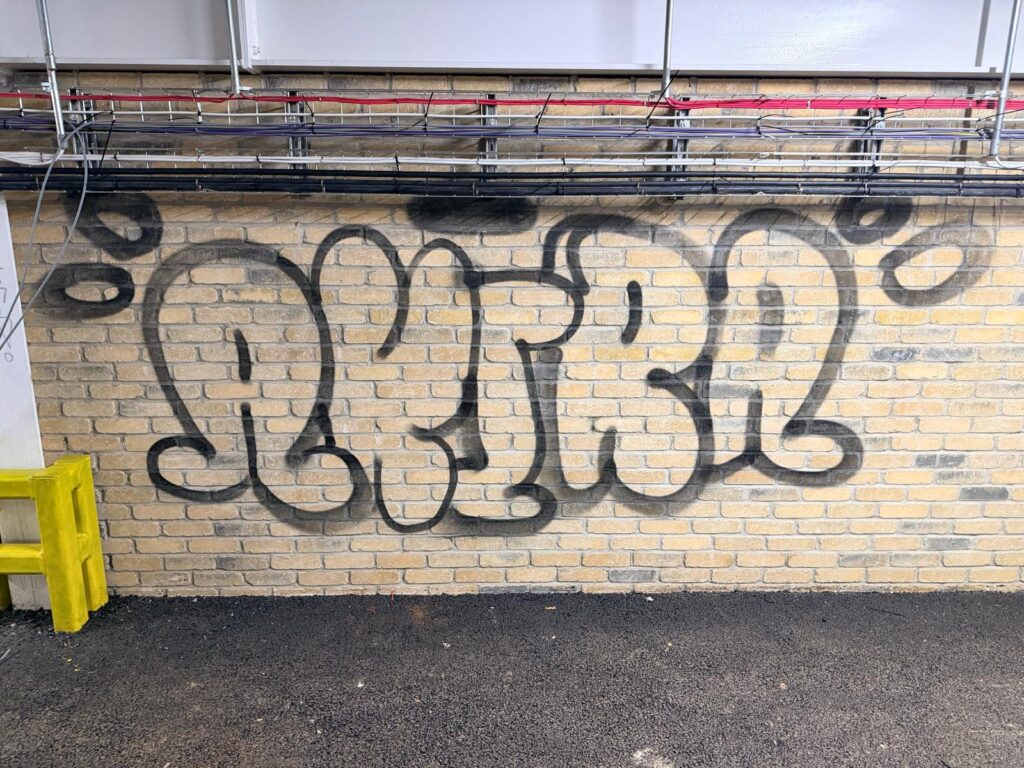
Token Cleaning Services recently partnered with a new client in London to address a significant graffiti issue within an underground car park of a newly completed block of flats. The project required a delicate balance of power and precision, ensuring the complete removal of unsightly tags without damaging the pristine surfaces of the new development. To achieve this, our team utilised a sophisticated two-stage approach: a targeted chemical cleaning process followed by high-temperature steam pressure washing.
The Unique Challenges of Underground Car Parks
Underground car parks present a specific set of environmental and logistical challenges that differ greatly from street-level cleaning. When a new client approaches us for a project of this nature, we must consider several factors before we even begin the removal process.
- Ventilation and Air Quality: Being subterranean, these spaces often have limited natural airflow. When performing a chemical cleaning operation, the choice of products is paramount. We must use professional-grade solutions that are effective yet low in volatile organic compounds (VOCs) to ensure the safety of our technicians and any residents who may be accessing their vehicles.
- Surface Sensitivity: New-build flats often use modern construction materials, including specific types of concrete finishes, sealants, and painted masonry. An aggressive approach could easily etch the surface or strip away protective coatings, leading to a much larger repair bill for the client.
- Lighting and Visibility: Underground spaces can have pockets of poor lighting. Graffiti tags, especially those made with permanent markers or specialised aerosol paints, can leave “ghosting” shadows that are only visible under certain angles. A thorough chemical cleaning requires meticulous attention to detail to ensure every trace of pigment is lifted.
- Drainage Constraints: Unlike an outdoor pavement, an underground car park has a finite drainage system. We must manage the water and chemical runoff carefully to prevent pooling or contamination of the internal drainage lines.
The Precision of Chemical Cleaning
The foundation of any successful graffiti removal project, particularly on sensitive or new masonry, is the intelligent use of chemical cleaning. Many people mistakenly believe that graffiti removal is simply a matter of “blasting” the paint off with water. In reality, high-pressure water alone can drive the paint pigments deeper into the pores of the concrete, making the stain permanent and causing “scarring” on the surface.
Our approach to chemical cleaning involves a scientific understanding of the bond between the graffiti medium and the substrate. Graffiti artists often use a variety of tools, from standard acrylic spray paints to high-pigment industrial markers and even bitumen-based substances. Each of these requires a specific chemical cleaning agent to break the molecular bond.
The process begins with the application of a specialist gel or liquid remover. This agent is designed to dwell on the surface, penetrating the layers of paint without attacking the underlying material. During this dwell time, the chemical cleaning process essentially liquefies the graffiti, turning a hard, cured layer of paint back into a suspension that can be safely rinsed away. This non-destructive method is essential for new-build developments where the goal is to return the surface to its original “as-delivered” state.
“The goal of professional graffiti removal is not just to hide the damage, but to restore the surface as if the vandalism never occurred. This requires a deep understanding of chemical cleaning and the patience to let the products do the heavy lifting.”
Integrating Steam Pressure Washing
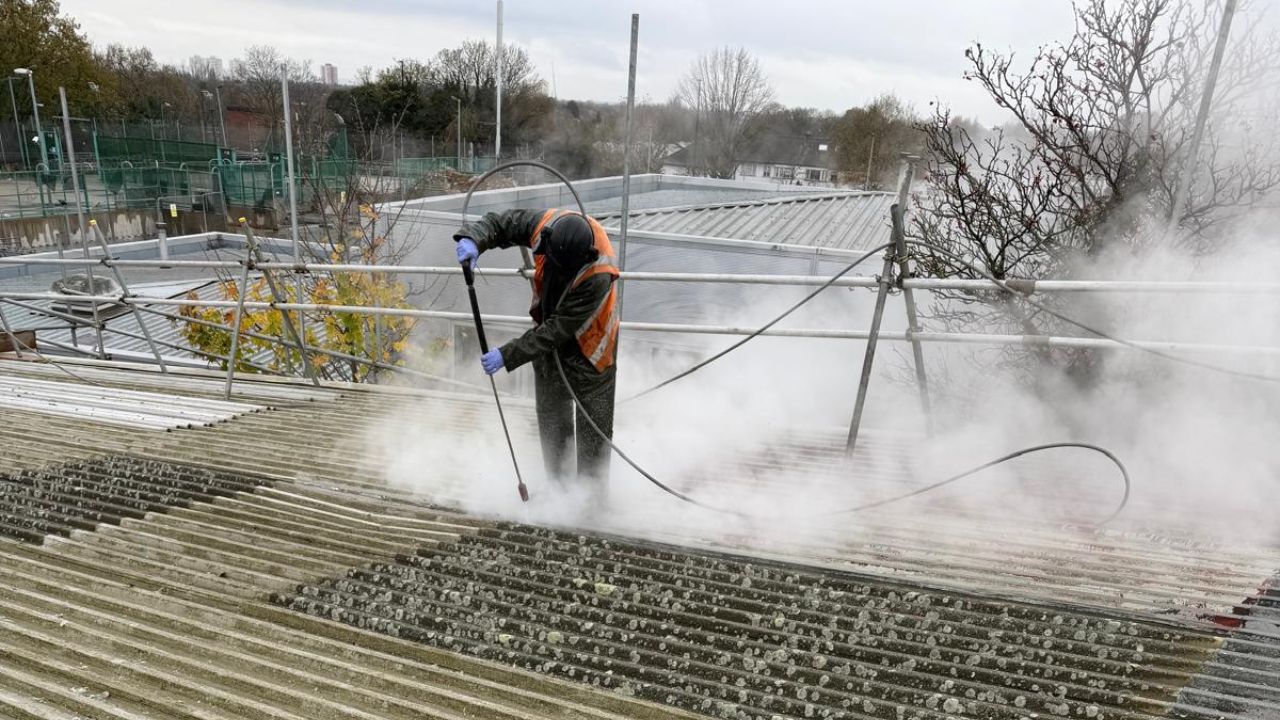
Once the chemical cleaning agents have successfully broken down the graffiti, the next phase is the removal of the residue. While cold water can be used, Token Cleaning Services almost exclusively uses steam pressure washing for these types of high-stakes London projects.
Steam pressure washing offers several advantages over traditional cold-water methods:
- Thermal Agitation: The high temperature of the steam (often reaching up to 150°C at the nozzle) further destabilises the paint particles. It acts as a catalyst for the chemical cleaning agents, ensuring that even the most stubborn pigments are lifted from the microscopic textures of the concrete.
- Reduced Water Volume: Because the heat is doing much of the work, we can achieve superior results using much lower water pressure. This is critical in an underground car park where excessive water volume can lead to drainage issues.
- Hygienic Finish: Steam naturally sanitises the area, removing not just the paint but also any underlying organic growth or oily residues that often accumulate in car park environments.
- Instant Evaporation: The heat from the steam cleaning process encourages faster drying times, which is vital in enclosed spaces with limited ventilation.
Case Study: The London Underground Car Park Project
Our recent project for a new client in London involved a series of large, multi-coloured tags across several concrete pillars and walls within a residential car park. The graffiti had been present for several days, allowing the paint to cure fully in the cool, damp underground environment.
We began by conducting a patch test to identify the most effective chemical cleaning solution for the specific paint used. Once the correct agent was identified, our team applied the treatment to all affected areas. We allowed for a significant dwell time, ensuring the chemical cleaning process reached the deepest pores of the concrete.
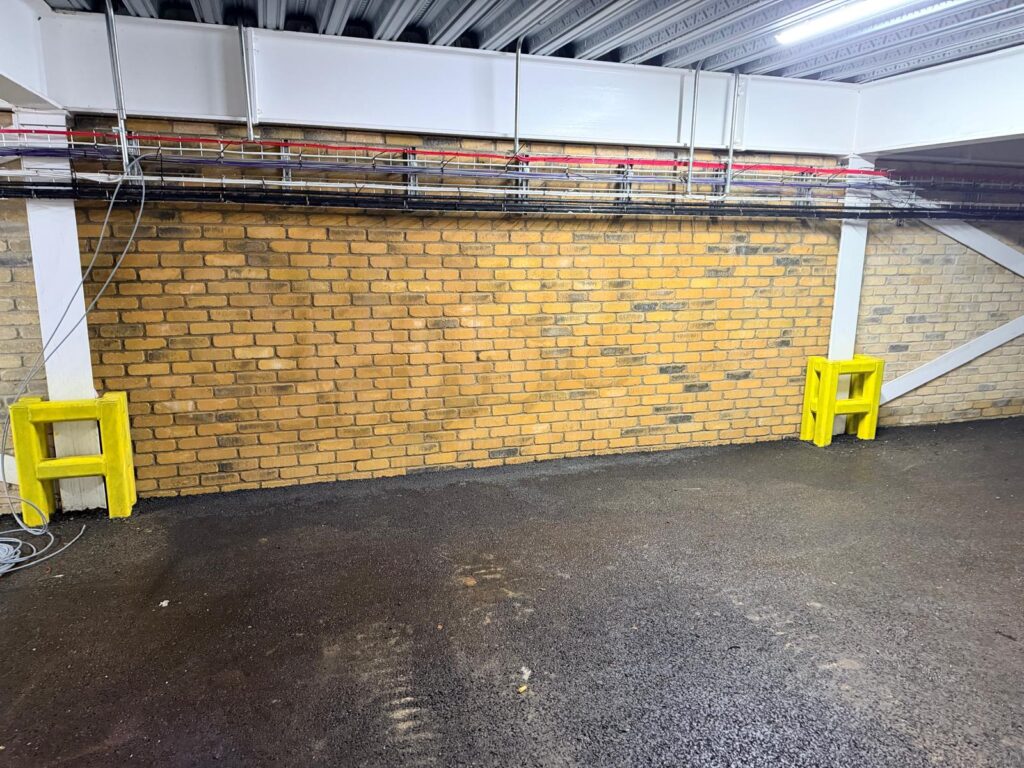
Following the application, we utilised our van-mounted steam pressure washing units. By carefully controlling the temperature and pressure, we rinsed away the liquefied paint. The result was a total restoration. There was no “ghosting,” no etching of the concrete, and no damage to the surrounding painted bay markings.
Our new client was particularly impressed by the speed of the turnaround. In a high-end London development, residents expect a certain standard of maintenance. By resolving the issue quickly and professionally, we helped the property management team maintain their reputation and keep their residents satisfied.
The Importance of Resident Perception and Property Value
For those managing new-build flats in London, the presence of graffiti is often seen as a “broken window” indicator. If graffiti is left untreated, it suggests a lack of oversight, which can lead to further acts of vandalism or anti-social behaviour.
From a resident’s perspective, driving into a car park covered in tags can feel unwelcoming or even unsafe. By investing in professional chemical cleaning and steam restoration, property managers demonstrate a commitment to excellence. This proactive maintenance directly supports property values and resident retention.
Furthermore, using a professional service ensures that the job is done right the first time. DIY attempts or low-cost “splash and dash” operators often leave shadows behind or damage the masonry, which can lead to much higher costs in the long run when the surface eventually needs a full restoration.
A Comprehensive Approach to Exterior Maintenance
While graffiti removal was the primary focus of this project, Token Cleaning Services provides a holistic range of maintenance solutions designed to keep London’s residential developments in peak condition. Our experience in chemical cleaning extends beyond just paint removal; we also specialise in:
- Efflorescence Removal: Addressing the white salt deposits that often appear on new brickwork.
- Oil and Grease Degreasing: Essential for maintaining the safety of car park floors.
- Stone and Brick Sealing: Applying breathable, protective layers that make future graffiti removal significantly easier.
- Facade Cleaning: Utilising the same steam and chemical cleaning principles to maintain the exterior aesthetic of the entire building.
Choosing the Right Partner for London Developments
When a new client looks for a cleaning contractor, they aren’t just looking for someone with a pressure washer. They are looking for a team that understands the nuances of modern architecture, the safety requirements of urban environments, and the chemistry behind effective restoration.
Token Cleaning Services has built a reputation across London for being that partner. Whether it is a heritage stone building in St. James or a brand-new residential block in a developing borough, our commitment to non-destructive chemical cleaning and high-performance steam washing ensures the best possible outcome.
We pride ourselves on our transparency, our safety record, and our ability to tackle the “impossible” stains that other companies shy away from. Our recent project in the underground car park is just one example of how we help our clients protect their investments and provide a clean, safe environment for their residents.
Conclusion
Graffiti doesn’t have to be a permanent scar on a new development. With the right combination of chemical cleaning and steam pressure washing, even the most extensive vandalism can be erased safely.
If you are a property manager or a developer in London facing similar challenges, don’t settle for subpar results. Choose a team that understands the science of cleaning. Contact Token Cleaning Services today for a consultation or a free site survey. Let us help you keep your property looking as pristine as the day it was built.
Would you like to discuss a preventative maintenance plan to protect your new development from future vandalism?