Graffiti is a pervasive issue, capable of turning clean, professional boundaries into eyesores overnight. While flat, solid walls are relatively straightforward to clean, tackling graffiti on mesh fencing presents a unique and frustrating challenge. The nature of mesh—with its intricate, multi-surface wiring and often-painted finish—means that aggressive cleaning methods can quickly cause irreversible damage, stripping away protective coatings and leaving the metal vulnerable to corrosion.
If you are a property manager, business owner, or homeowner in the UK dealing with this problem, you need a safe, effective, and precise solution. The answer lies not in brute force, but in the controlled power of low pressure steam cleaning, combined with specialist chemical treatments. This method, which we recently employed successfully on a challenging project on the Great West Road in London, represents the best practice in non-destructive graffiti removal on mesh fence panels.
The Challenge of Cleaning Mesh Fences
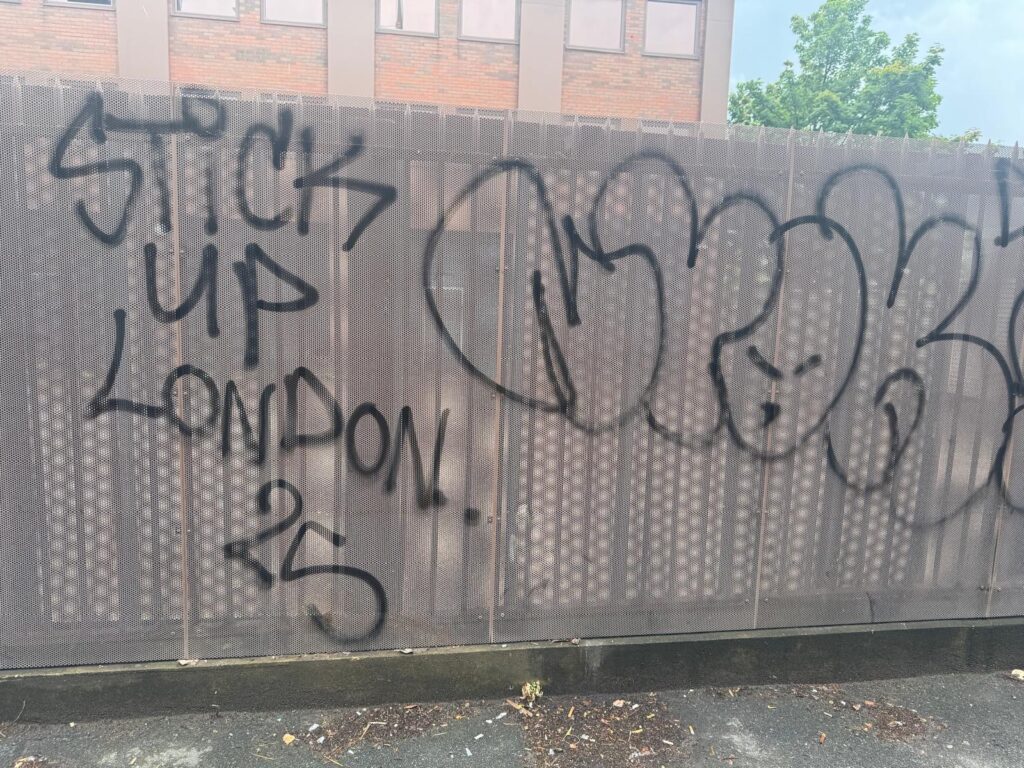
Mesh fencing, including chain-link, welded wire, or palisade panels, is difficult to clean for several key reasons:
- High Surface Area and Pores: Unlike a flat wall, mesh consists of hundreds of intersecting wires, creating countless crevices where paint can seep and anchor. The surface area is enormous, and cleaning every angle individually is nearly impossible.
- Delicate Coatings: Mesh is often galvanised or finished with a powder-coated paint layer for protection and aesthetics. High-pressure washing or abrasive cleaning methods (like sandblasting) will instantly destroy this coating, necessitating an expensive full repainting job to prevent rust.
- Paint Shadowing: Even if the main graffiti is removed, residues can be left behind, creating a faint outline or ‘shadow’ that makes the area still look dirty.
- Overspray Risk: When cleaning an open fence, there is a high risk of overspray hitting pedestrians, vehicles, or nearby property, requiring careful control.
These challenges necessitate a method that is effective at breaking down the paint without physically abrading or saturating the underlying metal.
The Specialist Solution: Chemical Stripper Meets Low Pressure Steam
Token Cleaning uses a precise, two-stage technique for successful graffiti removal on mesh fence panels, ensuring the paint is removed safely and completely.
1. Specialist Paint Remover Application
The first step is applying a chemical stripper specifically formulated to tackle the type of paint used in the graffiti (e.g., spray paint, marker ink) while being safe for the underlying fence material, particularly painted metal.
- Targeted Formula: For painted mesh fences, a non-aggressive, specialist paint-on-painted-surfaces remover is essential. This solvent is designed to penetrate and soften the graffiti paint without dissolving or damaging the original protective coating on the fence panel.
- Dwell Time: The stripper is carefully applied to the tagged area and given the appropriate ‘dwell time’—a period where the chemical is allowed to penetrate and break down the graffiti paint’s bonds. This process turns the hard, stubborn paint into a soft, residue-like film.
- Environmental Control: Professional cleaning ensures that the stripper is contained, preventing unnecessary run-off or exposure to the environment.
2. Precision Rinsing with Low Pressure Steam Cleaning
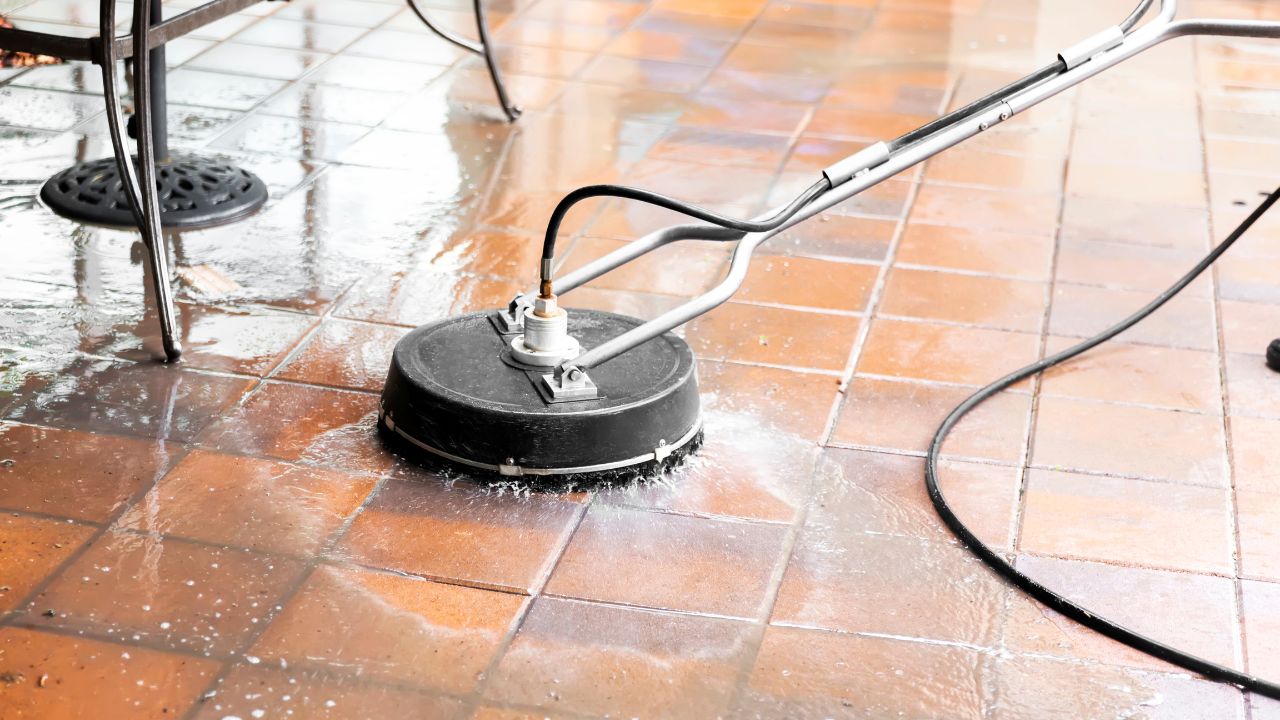
Once the graffiti paint has been softened, the low pressure steam cleaner is introduced. This is the critical step that differentiates a professional, damage-free removal from a destructive DIY attempt.
- The Power of Heat: Low pressure steam cleaning (often referred to as ‘hot washing’ or ‘steam cleaning’ in this context) uses high temperatures (often exceeding 100°C) combined with a gentle flow of water. The heat is incredibly effective at activating the chemical stripper and emulsifying the softened paint residue.
- Ultra-Low Pressure: Crucially, the water pressure used is extremely low—far below that of a standard cold pressure washer. The combination of heat and the chemical solution does the work, not the force of the water. This ensures the original fence coating and the mortar/concrete foundation remain completely unharmed.
- Shadow Removal: The high temperature is highly effective at lifting the last trace amounts of pigment from the mesh wires, preventing paint shadowing and achieving a truly clean finish.
- Sterilisation: The steam also acts as a powerful steriliser, leaving the metal surfaces hygienic.
Case Study: Great West Road, London
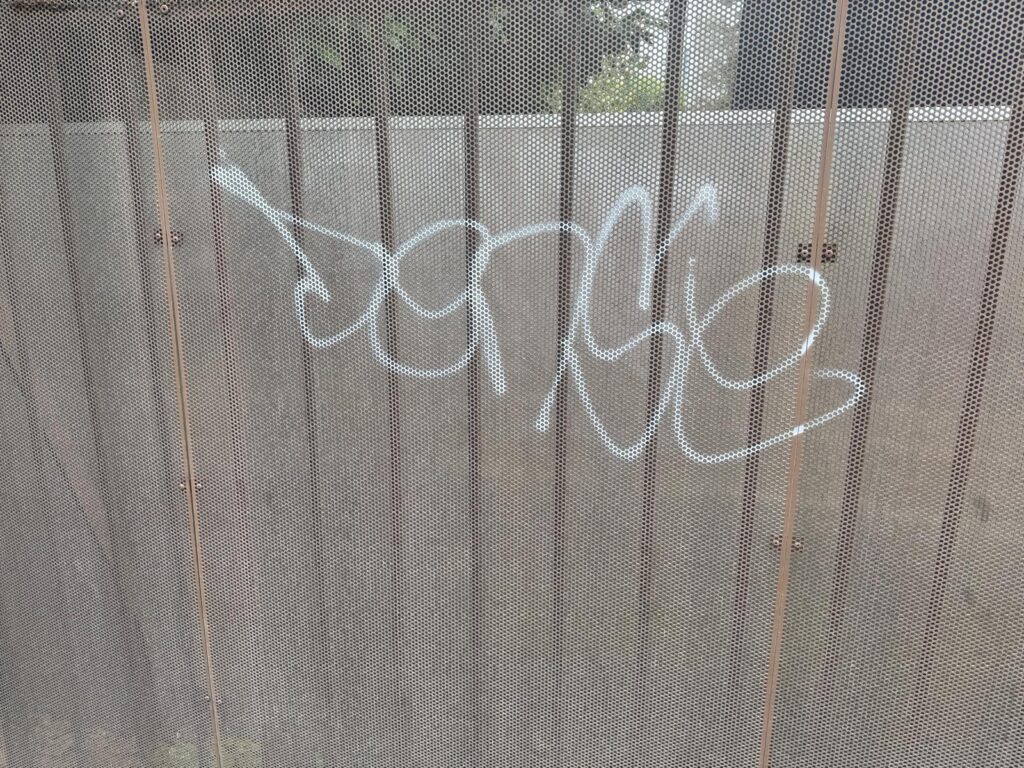
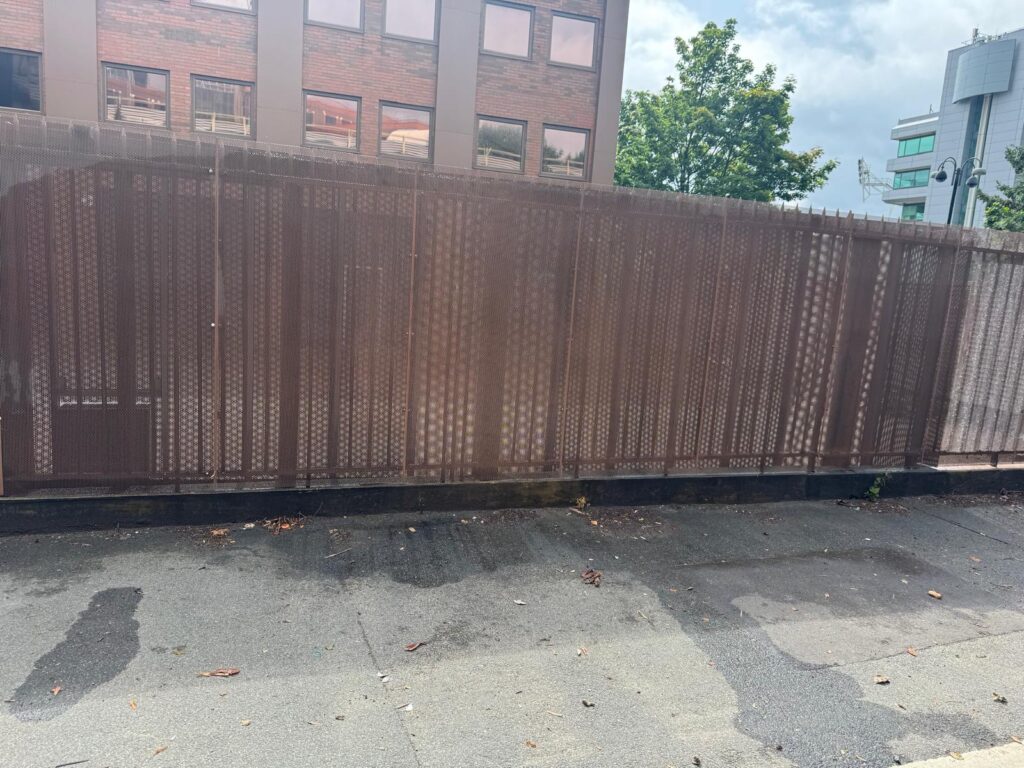
Our recent project on the Great West Road in London serves as a perfect demonstration of this technique’s effectiveness. The job involved complex graffiti removal on painted mesh fence panels.
The challenge here was twofold: the graffiti paint was deeply embedded in the mesh structure, and the underlying fence was already coated with a sensitive paint layer.
We executed the job using a specialist paint-on-painted surfaces remover with subsequent rinsing by low pressure steam cleaning. The gentle, heated flow of the steam worked with the chemicals to lift the graffiti effectively. This process successfully removed the tags without causing any damage or blistering to the underlying fence panel paint, restoring the fence to its original, professional appearance. This precision is only possible when highly trained technicians use commercial-grade equipment capable of delivering consistent, high-temperature, ultra-low pressure steam.
Long-Term Brickwork Maintenance: Beyond the Clean
Successful graffiti removal on mesh fence panels requires long-term planning. Once the graffiti is removed, two steps are essential for protection:
- Anti-Graffiti Coatings: For high-risk areas, applying an anti-graffiti coating to the cleaned panels is highly recommended. These clear, sacrificial coatings act as a barrier. If the fence is tagged again, the new graffiti sits on the coating, not the fence paint. The next time cleaning is required, the coating and the graffiti are simply removed together with hot water, leaving the underlying fence undamaged. This makes subsequent cleaning much faster and cheaper.
- Rapid Response Strategy: The fastest way to deter repeat tagging is to remove new graffiti within 24–48 hours. Graffiti artists are less likely to target surfaces that are known to be quickly cleaned.
Why Choose Professional Low Pressure Steam Cleaning?
When faced with tagging, choosing Token Cleaning ensures you benefit from:
- Non-Destructive Cleaning: We guarantee that our low pressure steam cleaning process will not damage the painted or galvanised finish of your mesh fence.
- Complete Shadow Removal: Our combination of specialist chemicals and steam ensures the complete removal of graffiti pigments, preventing frustrating paint shadowing.
- Expert Knowledge: Our technicians are trained to identify the type of graffiti paint used and select the precise chemical stripper that will be effective yet safe for your specific fence material.
- Safety and Compliance: We operate under strict safety protocols, especially in busy public areas like the Great West Road, ensuring controlled overspray and proper disposal of all chemical residues.
Graffiti on a mesh fence doesn’t have to be a permanent problem. With the cutting-edge technology of low pressure steam cleaning and specialist chemical treatment, Token Cleaning Services provides a reliable, safe, and highly effective solution for commercial and residential properties across London and the UK.
Don’t let unsightly tags compromise your property’s image. Contact Token Cleaning Services today for a consultation and safe, guaranteed graffiti removal.