When concrete walkways and public areas lose their grip, they become more than just an eyesore; they become a significant liability. In the damp British climate, it is common to see prestigious properties and local community areas alike succumb to organic growth. The transformation of a clean surface into a green, treacherous one can happen surprisingly quickly.
If you manage a property or public space and have noticed a green film developing, you are likely asking: how do you clean slippery concrete walkways safely? The answer involves a careful balance of high-temperature steam and targeted detergents. At Token Cleaning, we recently completed two distinct projects that perfectly illustrate this challenge: a community walkway in Bishopsfield, Harlow, and a high-end property in London.
The Danger of the “Green Film”: Why Concrete Becomes Slippery
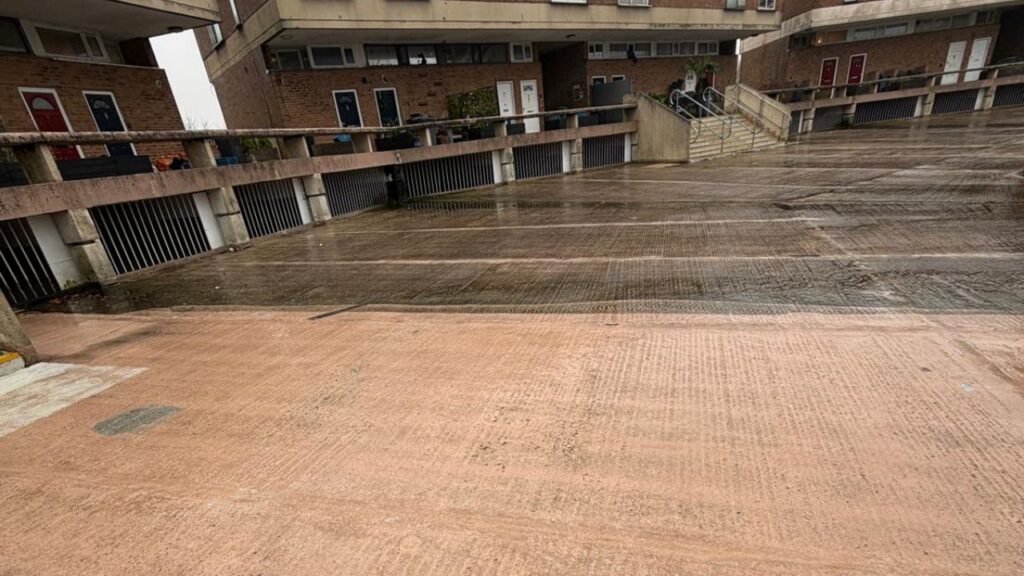
Concrete is a porous material. While it is durable, its textured surface is designed to provide traction for pedestrians. However, those same tiny pores and ridges trap moisture, dust, and organic spores. Over time, several factors lead to the “green” look seen in the image provided:
- Algae and Moss Growth: In shaded or damp areas, green algae and moss flourish. These organisms create a thin, slimy layer that acts as a lubricant between a shoe and the concrete.
- Atmospheric Pollution: Soot and grime from traffic settle on the surface, mixing with rainwater to create a slick residue.
- Standing Water: If a walkway doesn’t drain perfectly, the constant presence of water accelerates the growth of biofilms.
For the safety of the public, especially in high-traffic areas like Harlow or busy London residences, this “filthy” state must be addressed before an accident occurs.
The Solution: High-Pressure Steam and Detergent
To restore a walkway to its original safety standard, you cannot rely on a cold-water hose. You need a process that sanitises the surface and removes the organic “roots” of the algae.
Why Steam?
Steam pressure washing is the most effective method for cleaning sensitive or heavily soiled concrete. Unlike standard cold pressure washing, which relies purely on mechanical force, steam uses thermal energy.
- Biological Kill: The high temperature of the steam kills algae and moss spores on contact, significantly delaying their return.
- Grease and Oil Breakdown: Heat emulsifies greasy residues and traffic film that cold water simply cannot budge.
- Preservation: Because the heat does the heavy lifting, we can often use lower pressure than cold washing requires, which protects the integrity of the concrete surface.
The Role of Specialist Detergents
When dealing with extreme neglect—such as a “filthy” walkway—steam alone might need a helping hand. We use biodegradable, professional-grade detergents designed to break the molecular bond between the algae and the concrete. This ensures that every trace of the slippery film is lifted and rinsed away.
Case Study: Bishopsfield, Harlow (For HTS Harlow)
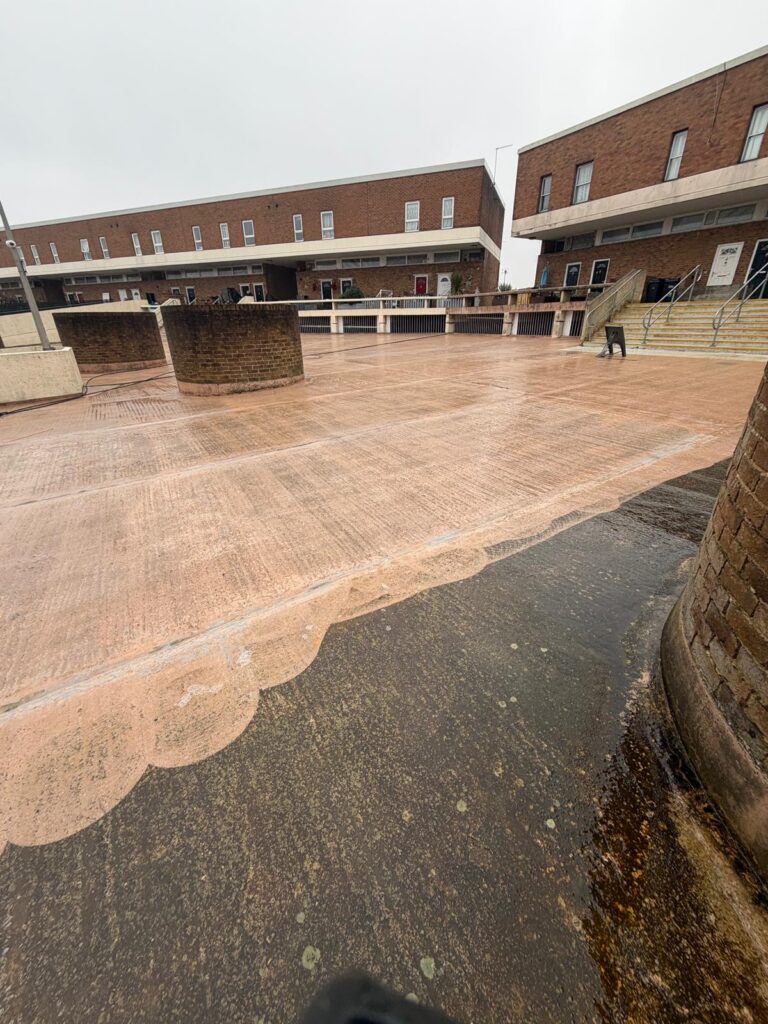
Working on behalf of HTS Harlow, we tackled a particularly challenging area in Bishopsfield. This was a main walkway used daily by the public that had become dangerously green and slippery.
Our Approach in Bishopsfield:
- Safety First: Because this was a public area, our primary goal was to restore the safety of the walkway.
- The Process: We utilised high-pressure steam cleaned with detergent to penetrate the years of dirt and algae.
- The Result: As the image demonstrates, the difference is night and day. We removed the “filthy” layer completely, leaving a clean, high-traction surface that is safe for the residents of Harlow to use, even in wet weather.
Why Professional Cleaning Outperforms DIY
Many people attempt to clean these areas themselves with a domestic pressure washer, but this often leads to a cycle of failure:
- Incomplete Removal: Cold water often leaves the “roots” of the algae behind, meaning the green film returns in just a few weeks.
- Surface Damage: Domestic users often hold the nozzle too close to the concrete, causing “etching” or permanent scarring on the surface.
- Water Saturation: Without the heat of steam to aid evaporation, the concrete remains saturated for longer, which actually encourages the return of moss.
Token Cleaning: Your Partner in Public and Private Safety
At Token Cleaning Services, we understand that different environments require different strategies. Whether it’s a large-scale public safety project for HTS Harlow or the delicate restoration of a London residence, we have the expertise to deliver.
Our Exterior Maintenance Services Include:
- High-Pressure Steam Cleaning: For the toughest algae and grime removal.
- Soft Washing: For delicate masonry and areas where low pressure is vital.
- Drain Cleaning: To ensure that once the walkway is clean, the water has somewhere to go.
- Patio and Driveway Sealing: To protect your clean concrete and make future maintenance easier.
Conclusion
If you are wondering how do you clean slippery concrete walkways safely?, the answer is a professional, high-temperature steam process tailored to your specific surface. Our recent work in Bishopsfield, Harlow, and our specialist projects in London prove that no matter how “filthy” or “green” a surface has become, it can be restored to a safe, clean, and professional state.
Don’t wait for a slip-and-fall accident to occur. A green walkway is a warning sign that your property needs professional care.
Is your concrete walkway becoming a hazard? Contact Token Cleaning Services today for a free site survey. Whether you represent a local authority like HTS or own a prestigious private property, we have the steam technology and the experience to make your surfaces safe and spotless once again.
Would you like us to provide a quote for a regular maintenance schedule to ensure your walkways stay clean and safe year-round?