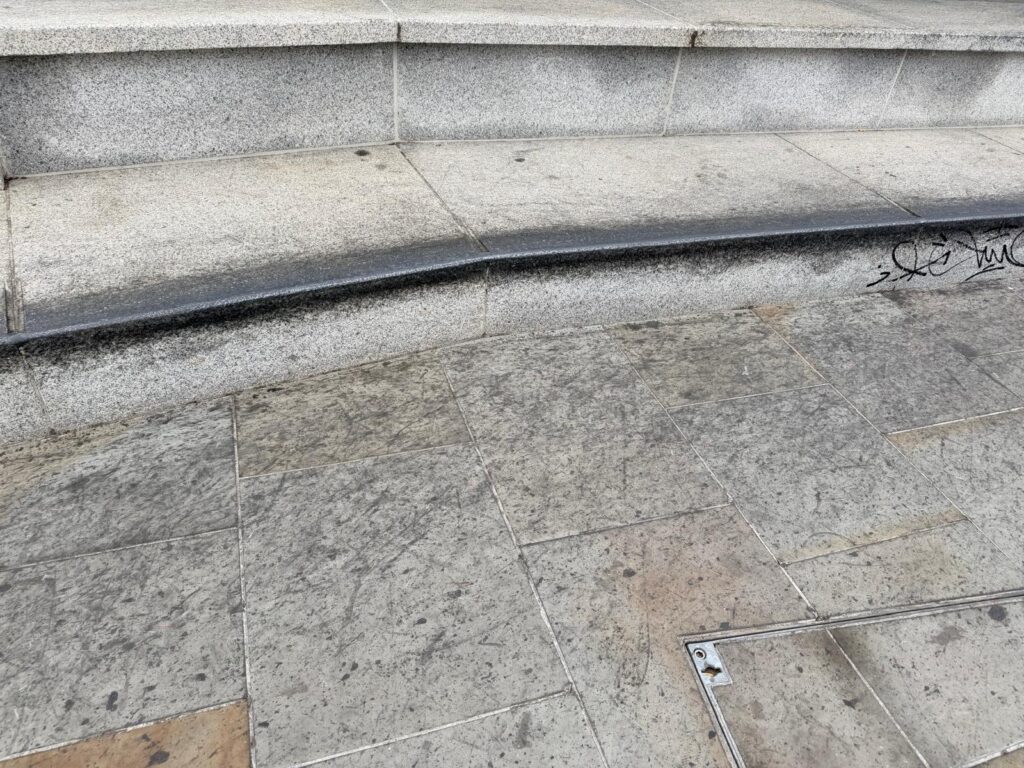
Public spaces take a beating. On one recent job at a major London riverside project, the smart granite steps and York stone paving had become a magnet for skateboarders. Years of grinds and slides had left thick, greasy black wax baked into the stone edges, with the odd graffiti tag on top for good measure. The client needed it gone without harming the stone, and skateboard wax removal turned out to be a job that rewarded patience and the right method over brute force.
Here is how we brought the paving, steps, and kerbs back to a clean, safe finish.
The Problem: Why Skate Wax Is So Stubborn
Skateboarders rub wax along ledges, kerbs, steps, and coping to cut friction for slides and grinds. A little wax quickly becomes a lot. Over time it builds into a dark, sticky film that traps dirt, grease, and grime.
On this project, the damage showed up in the usual places:
- Step nosings and kerb edges coated in black, greasy wax
- Granite paving stained where wax had been walked across the surface
- York stone discoloured and dulled along the skate lines
The build-up was more than an eyesore. Greasy edges can be slippery, and dark staining made a newly finished public space look tired and neglected. That is why effective skateboard wax removal mattered so much here.
Why High Pressure Was Never an Option
The instinct with tough stone stains is to reach for a powerful jet wash. On a job like this, that would have been a mistake.
The site mixed two very different surfaces. Granite is hard, but its polished or flamed finish can be dulled and marked by aggressive jetting. York stone is a softer sandstone, more porous and easier to scar. Blast either with high pressure and you risk etching the surface, opening the pores, and driving the wax deeper rather than lifting it.
Skate wax is also greasy, so cold water alone simply smears it around. To remove it properly you need two things working together: a degreasing agent to break the wax down, and controlled heat to melt and lift it. That points to a gentler, smarter approach.
Our Method: Chemical Treatment Plus Low-Pressure Steam
Our skateboard wax removal process combined specialist chemistry with low-pressure steam cleaning. It runs in careful stages.
Stage one: survey and test. We assessed each surface and tested a small, discreet area first. Granite and York stone respond differently, so we tailored the treatment to each.
Stage two: apply a degreaser. We worked a specialist degreasing solution into the waxed areas. This begins breaking down the greasy film so it can be lifted rather than smeared.
Stage three: dwell time. We let the solution do its work. Rushing this stage is where quick jobs fail. Giving the degreaser time to penetrate is what makes the wax release cleanly.
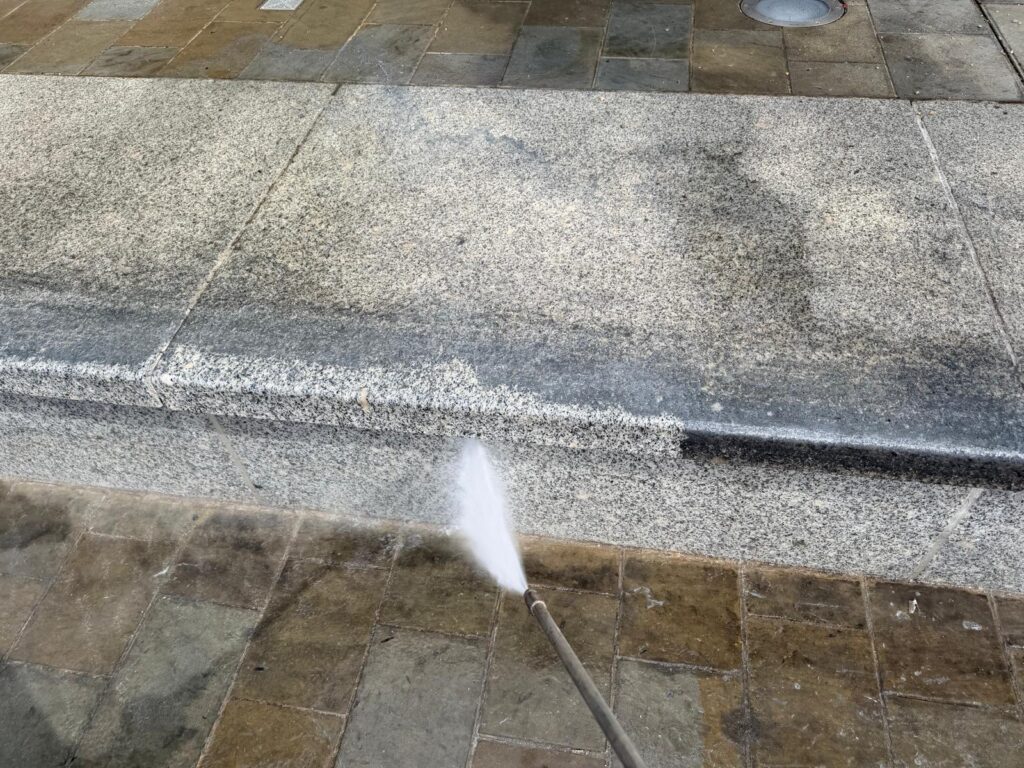
Stage four: low-pressure steam. Next we introduced steam. Working at high temperature but low pressure, the steam melts the softened wax and floats it off the surface, without hammering the stone. The heat lifts the grease that cold water leaves behind.
Stage five: rinse and check. Finally we rinsed thoroughly and inspected every edge, repeating the process on stubborn patches until the stone was clean and even.
This is the same low-impact principle we use on delicate substrates elsewhere, such as our recent low-pressure steam project on mesh fencing.
The Graffiti Element
Alongside the wax, a few graffiti tags had appeared on the granite. These came off using the same gentle principle: a targeted chemical stripper to soften the paint, followed by low-pressure steam to lift it away.
Because the surfaces were valuable public paving, we took care to contain any run-off and avoid overspray. If you want the detail on how we tackle tagging on stone and other surfaces, our graffiti removal service page explains the approach. On this project, though, the graffiti was a small part of a much bigger skate-wax challenge.
The Result: Clean, Safe, Public-Ready Paving
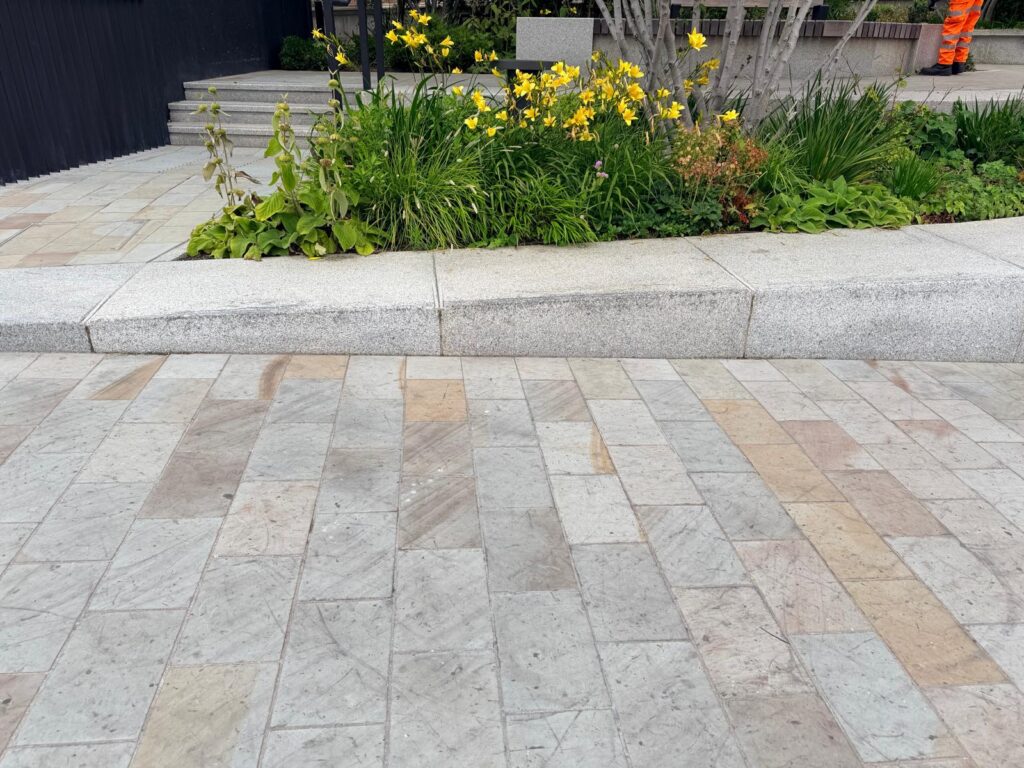
The transformation was striking. The black skate lines vanished from the step nosings and kerbs. The granite regained its finish, and the York stone returned to an even, natural tone. The tags were gone too.
More importantly, the paving was safe and presentable again. Clean edges mean better grip underfoot and a public space that looks cared for rather than abandoned.
Why Skateboard Wax Removal Is a Job for Professionals
For a facilities or estate manager, skate wax is a recurring headache. It is tempting to send a maintenance team out with a pressure washer, but on quality stone that often causes lasting damage.
Professional skateboard wax removal brings three advantages:
- Surface-specific method. Granite, York stone, and concrete each need a slightly different approach. A survey settles this before any cleaning starts.
- Heat plus chemistry. The right degreaser and controlled steam lift the wax at the root, rather than smearing or baking it in.
- No lasting damage. Low-pressure methods protect the finish, so the stone is not left etched, dulled, or more prone to future staining.
The result lasts longer and protects the value of the paving, which matters when the surfaces are part of a high-profile public realm.
Keeping Stone Clean for the Long Term
Skate spots rarely fix themselves, so prevention helps. For sites that attract repeat activity, we often recommend:
- Protective sealing, which makes future wax and graffiti far easier to lift
- A rapid-response plan, since fresh wax and tags come away more easily than old, baked-on build-up
- Regular inspection of the usual skate lines, so problems are caught early
These steps keep public spaces looking their best and reduce the cost of each clean over time.
Dealing With Skate Wax or Stained Stone?
If skateboard wax, graffiti, or ingrained grime is spoiling your paving, steps, or public realm, there is a safe way to put it right. With the correct survey and a gentle, proven method, even polished granite and soft York stone can be fully restored.
Token Cleaning Services has cared for stone across London, Essex, Hertfordshire, and the wider South East for over 50 years. Explore our stone cleaning service, see the full range on our cleaning methods page, or read more project stories on our blog. To arrange a no-obligation survey, call 01279 422752.