Finding the best way to clean coping stones is essential for maintaining the pristine appearance of a high-end development in London. Urban masonry faces constant threats from atmospheric pollution, carbon deposits, and organic growth, which can quickly mar a building’s aesthetic. Modern architectural designs frequently combine different materials that require specific, individual care; for example, delicate coping stones cannot be treated with the same aggressive force as robust paving slabs. Consequently, professionals must utilise a tailored approach to ensure the longevity and safety of these varied surfaces.
The most effective solution for this challenge involves a sophisticated combination of chemical cleaning and steam technology. By blending the right detergents with varying levels of steam pressure, technicians can achieve a deep clean that respects the integrity of the building. This method ensures that the property remains an asset rather than a maintenance liability.
The Science of Professional Masonry Restoration
Before starting any project, it is vital to understand the physics of the cleaning process. Many people assume that higher pressure equals better results. However, excessive force often leads to irreversible surface damage. Professional restoration focuses on three primary elements: chemistry, heat, and controlled pressure.
1. The Role of Chemical Cleaning
In the context of masonry, chemical cleaning refers to the use of specialist detergents or surfactants. These are not harsh acids. Instead, they are engineered to break the molecular bond between the dirt and the stone. Specifically, these detergents surround the pollutant particles, lifting them away from the pores of the masonry.
Moreover, using a detergent-first approach allows for lower water pressure. Consequently, the stone remains structurally sound while the dirt is safely emulsified. This is particularly important for newer developments where the mortar and stone have not yet fully cured or are inherently soft.
2. The Power of Steam
Steam provides a thermal shock that cold water simply cannot replicate. Specifically, high-temperature steam expands the dirt and biological spores within the stone. This expansion causes the pollutants to lose their grip. Furthermore, steam kills algae, moss, and lichen at the root. Therefore, the results last significantly longer than traditional power washing.
3. Balancing Pressure Levels
Professional technicians must constantly adjust their equipment. For example, a “fully charged” high-pressure stream is perfect for removing heavy soot from paving. In contrast, a low-pressure vapour is necessary for delicate features. Balancing these levels prevents the “etching” or “scarring” often seen in amateur cleaning attempts.
Case Study: Distillery Wharf, London
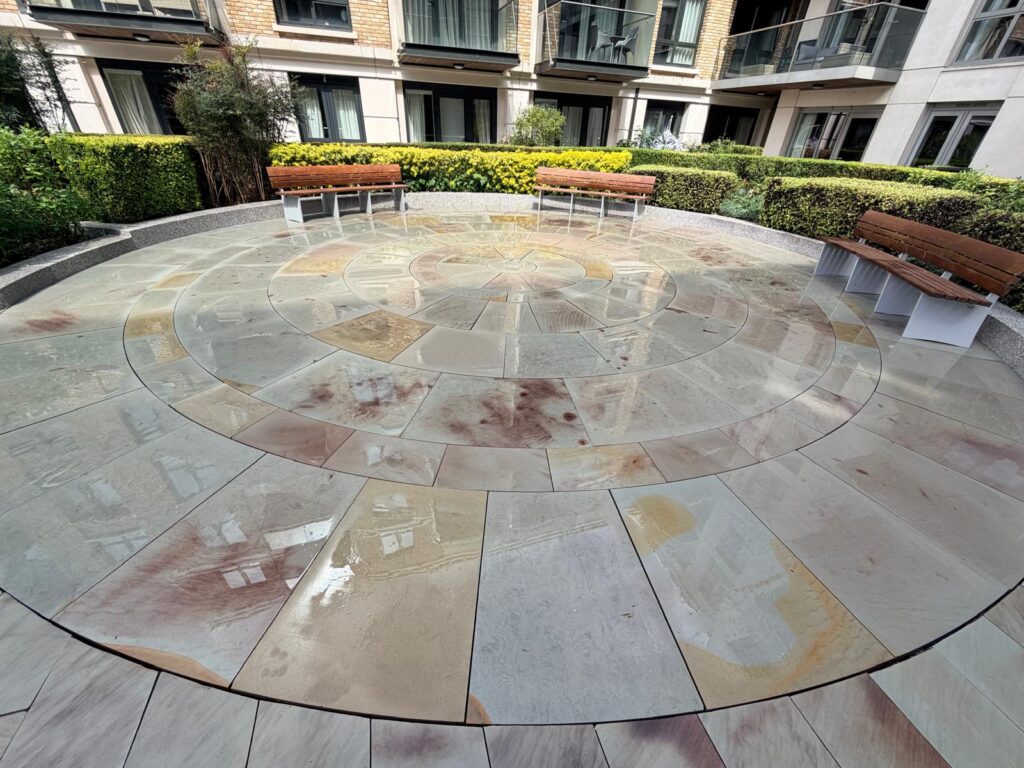
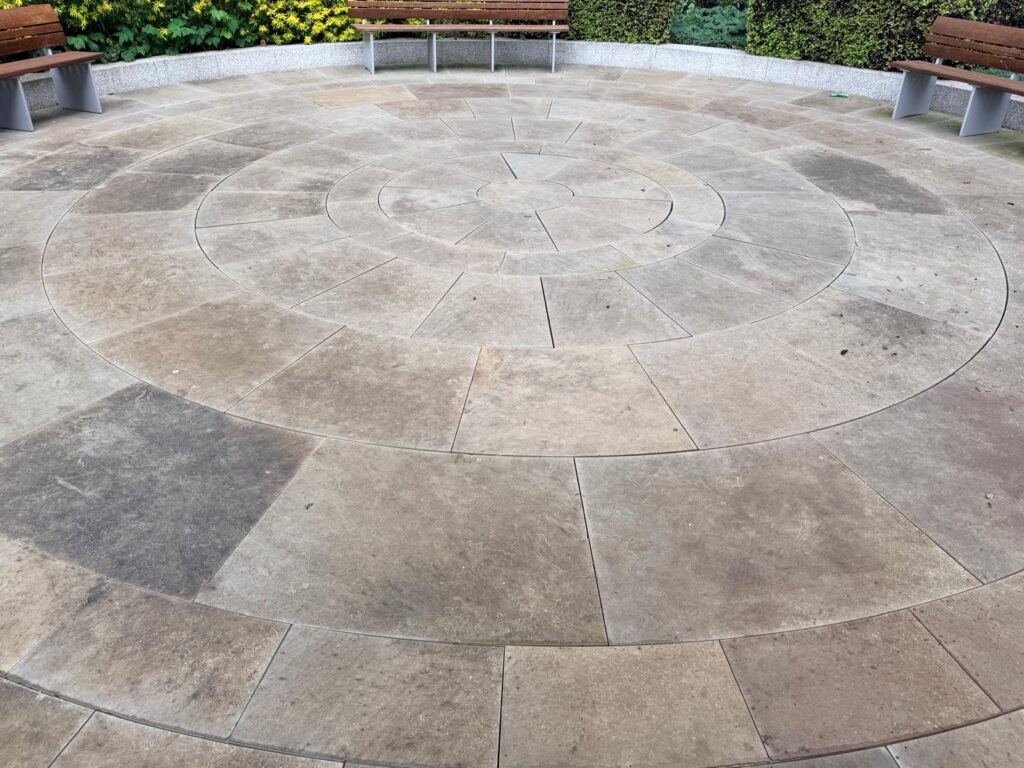
Token Cleaning recently applied these advanced methodologies at Distillery Wharf, London. This prestigious residential development features extensive podium areas that serve as communal hubs for residents. The project required a meticulous approach to restore the aesthetic appeal while ensuring the safety of the walking surfaces.
Restoring the Coping Stones
The coping stones at Distillery Wharf are a prominent architectural feature. They cap the walls and provide a clean, horizontal line across the landscape. However, because they are highly visible and often made of softer masonry, they are susceptible to environmental staining.
For this specific task, our team utilised a specialised mixture of chemical cleaning and low-pressure steam.
- The Process: We first applied a mild detergent to the coping stones. This allowed the surfactant to dwell on the surface, breaking down the grey atmospheric film.
- The Steam: We then used low-pressure steam to rinse the stones. The heat lifted the dirt without vibrating the stone or damaging the joints.
- The Result: The copings were returned to their original, bright finish without any loss of surface material.
Revitalising the Podium Paving Slabs
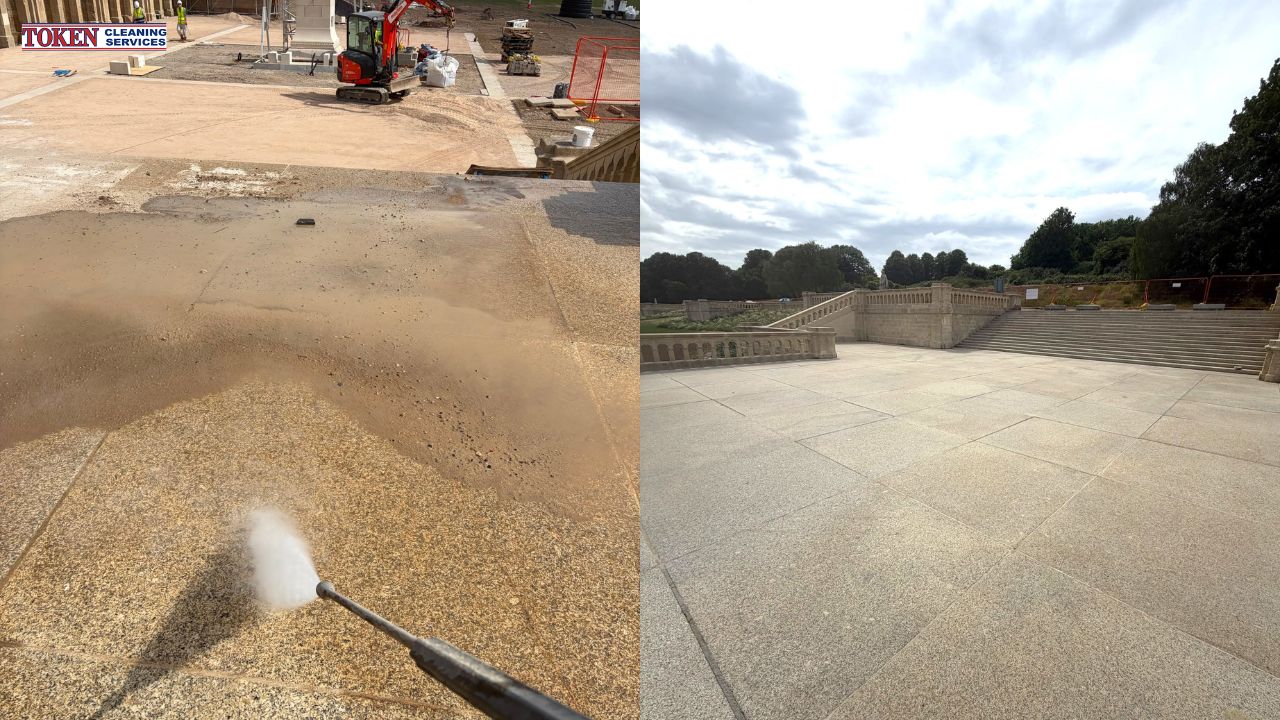
The podium areas at Distillery Wharf experience significant foot traffic. Over time, the paving slabs had accumulated a layer of grime that was both unsightly and potentially slippery. Unlike the coping stones, these slabs required a more robust approach to clear deep-seated dirt from the textured surface.
For the paving, our technicians employed high-pressure steam cleaning.
- Agitation: The high-pressure steam acted as a physical agitator, reaching into the microscopic pits of the paving.
- Sanitisation: The heat ensured that any biological growth was completely eliminated, restoring the natural slip resistance of the slabs.
- Efficiency: Because we utilised high-temperature steam, we were able to clean large areas of the podium quickly. Consequently, there was minimal disruption to the residents.
Why Podium Maintenance is Critical for Property Value
In a city like London, a podium area is a luxury. It represents a shared space for relaxation and community. However, if the masonry is allowed to “go green,” the entire perception of the development changes. Regular maintenance through professional chemical cleaning and steam washing is not just about looks; it is about preservation.
Furthermore, a clean podium is a safe podium. Algae and moss thrive in the damp London climate. When these organisms get wet, they become incredibly slick. By using steam to kill these spores, we ensure the safety of everyone who walks through Distillery Wharf. Consequently, property managers can avoid the liability of slip-and-fall accidents.
Beyond the Podium: Our Comprehensive Cleaning Services
While our work at Distillery Wharf highlights our expertise in masonry, Token Cleaning offers a broad range of specialist services across London and the surrounding areas. We apply the same level of precision and technical knowledge to every project.
1. Specialist Graffiti Removal
Vandalism can strike even the most prestigious developments. We provide a rapid-response graffiti removal service. Specifically, we use the same principles of chemical cleaning and steam to erase tags without leaving “ghosting” or shadows behind.
2. Drain Cleaning and Maintenance
Underground issues can quickly become surface-level problems. We offer professional drain cleaning to prevent “fully charged” manholes and overflows. Whether it is removing excessive fat or clearing silt from a soakaway, our team has the industrial equipment to keep your property’s drainage flowing.
3. Roof and Gutter Care
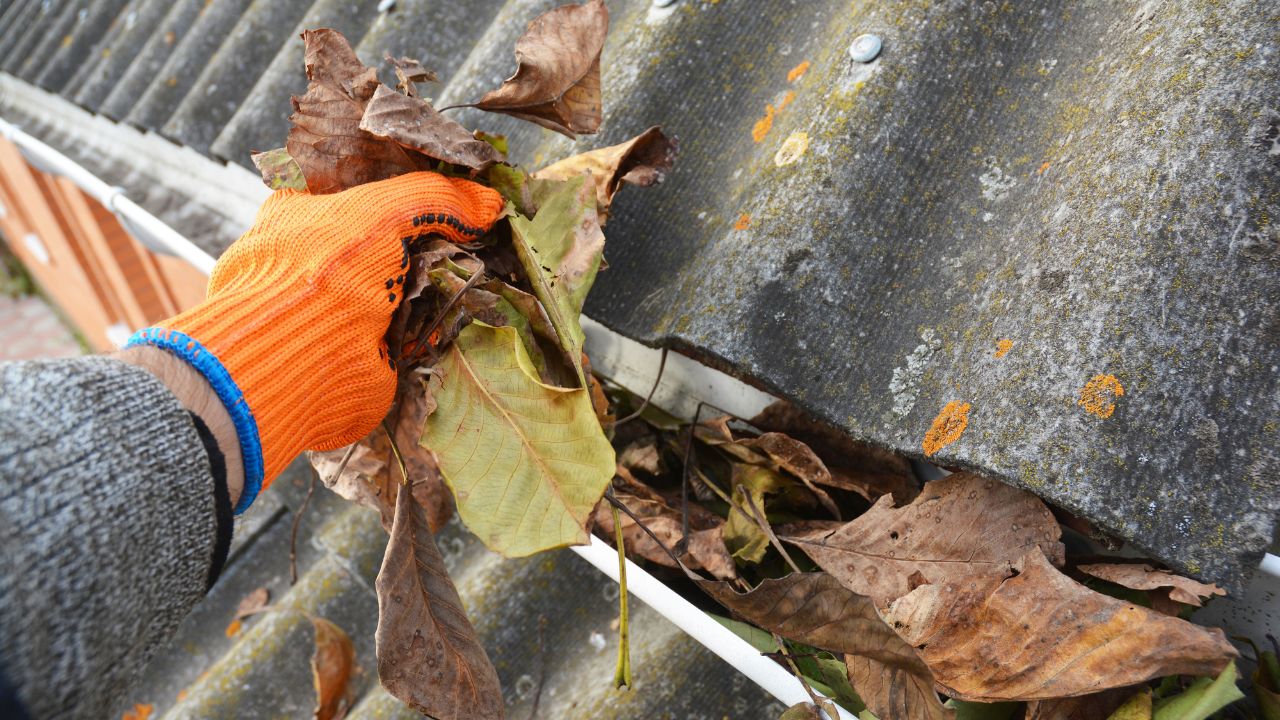
A clean roof protects the building fabric. We specialise in cleaning glazed roof panels and clearing gutters on schools, residential blocks, and commercial offices. Specifically, we utilise reach-and-wash systems to ensure a safe, streak-free finish from the ground level.
4. Internal Floor Degreasing
For our hospitality clients, we provide deep degreasing for restaurant floors. Using rotary floor scrubbing machines, we remove the hazardous film of oil and fat that daily mopping misses. This service is essential for kitchen safety and hygiene compliance.
Choosing the Right Restoration Partner
When you manage a property as significant as Distillery Wharf, you cannot leave maintenance to chance. You need a partner who understands the chemistry of the stone and the physics of the cleaning equipment.
Token Cleaning prides itself on a “Sympathetic Restoration” philosophy. We believe in using the minimum force necessary to achieve the maximum result. Our work in London has built a reputation for quality, safety, and reliability.
Is your property in need of a professional restoration? Whether you are dealing with dirty copings, slippery pavings, or blocked drains, we are here to help. Contact Token Cleaning Services today for a free site survey. Let us provide a bespoke cleaning solution that restores your masonry and protects your investment for years to come.